What if Earth had Saturn's rings?
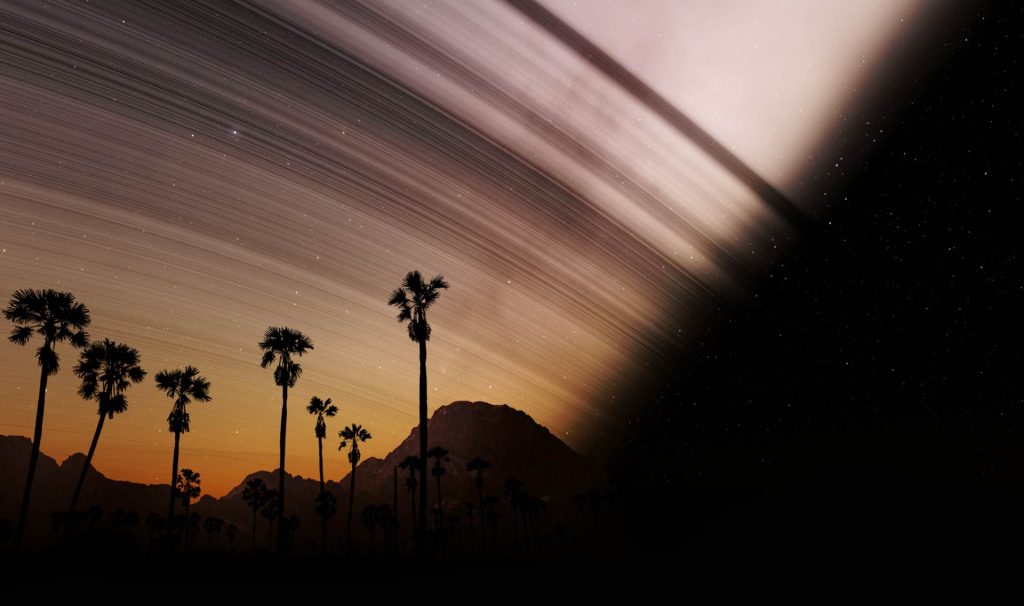
Saturn's rings Few questions ignite the imagination quite like this one. The idea of our planet surrounded by vast, luminous rings—stretching across the sky day and night—sounds like something from science fiction. Yet, by applying what astronomers know about planetary rings, orbital mechanics, climate science, and Earth’s own history, we can explore this scenario with surprising scientific rigor.
Understanding Planetary Rings: A Scientific Overview
Planetary rings are composed primarily of ice, rock, and dust particles that orbit a planet within its Roche limit—the distance at which tidal forces prevent material from forming a moon. Saturn’s rings are the most prominent in the Solar System, spanning nearly 280,000 kilometers in diameter while remaining astonishingly thin, often less than 100 meters thick.
Other gas giants—Jupiter, Uranus, and Neptune—also possess ring systems, though far less visible. Earth currently lacks rings, but evidence suggests that temporary ring systems may have existed in its distant past following massive collisions.
According to research published in Nature Astronomy, large impacts can generate debris disks around terrestrial planets, which may persist for millions of years before dissipating or forming moons (Nature Astronomy).
How Could Earth Acquire a Ring System?
A ringed Earth would require a dramatic event. The most plausible scenarios include:
- A collision with a Mars-sized body, similar to the event that formed the Moon
- The tidal disruption of a captured asteroid or small moon
- The breakup of an existing satellite due to gravitational stress
Simulations suggest that debris from such events could spread into a stable ring system, at least temporarily. However, Earth’s relatively strong gravitational interactions with the Moon and the Sun would make long-term ring stability challenging.
Nevertheless, for the sake of exploration, let us assume Earth somehow maintains a stable ring system comparable in scale and brightness to Saturn’s rings.
The View from the Ground: A Transformed Sky
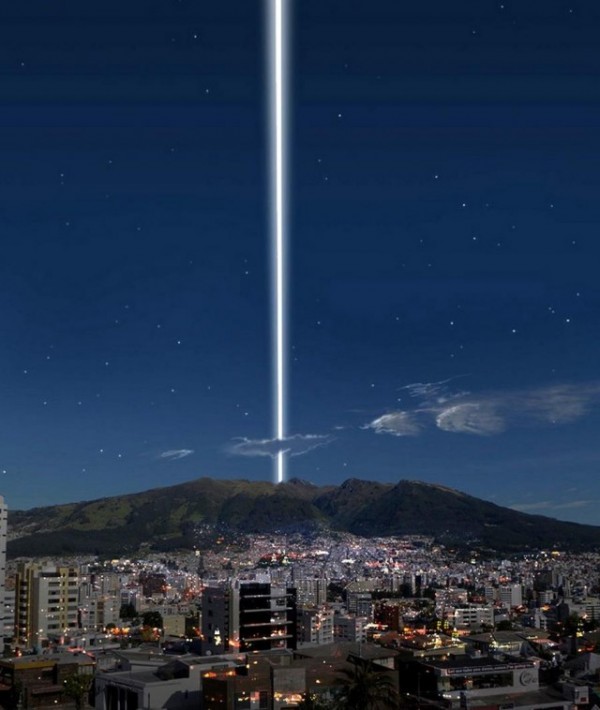
The most immediate and dramatic change would be visual. Earth’s rings would dominate the sky, appearing as a glowing band stretching from horizon to horizon. Their appearance would vary depending on latitude:
- Equatorial regions: Rings would form a bright arc across the sky, visible day and night
- Mid-latitudes: Seasonal tilts would cause dramatic changes in ring visibility
- Polar regions: Rings might appear edge-on or disappear entirely at certain times
At night, the rings would reflect sunlight and moonlight, dramatically reducing natural darkness. True astronomical night, as defined today, might cease to exist in many regions.
Impact on Astronomy and Space Observation
A ringed Earth would pose serious challenges for observational astronomy. Increased sky brightness would:
- Obscure faint stars and distant galaxies
- Reduce the effectiveness of ground-based telescopes
- Accelerate the shift toward space-based observatories
Astronomers already struggle with light pollution. Rings would represent a natural but far more pervasive version of the same problem. Observatories like those operated by the European Southern Observatory (ESO) would likely be relocated to space or the far side of the Moon.
Climate Consequences: Shadows on a Global Scale
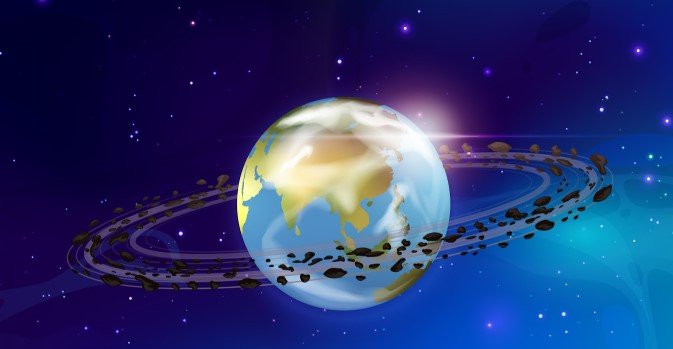
Perhaps the most profound effects would be climatic. Saturn’s rings would cast massive, shifting shadows on Earth’s surface, altering how solar radiation is distributed across the planet.
Global Cooling and Temperature Variability
Climate models suggest that persistent ring shadows could lower average global temperatures by several degrees. Regions under frequent shadow would experience reduced photosynthesis, cooler summers, and harsher winters.
Some researchers propose that such shading could even trigger or intensify ice ages, particularly if ring orientation favored prolonged shading of one hemisphere.
Disrupted Seasonal Cycles
Earth’s seasons are driven by axial tilt. Rings aligned with the equatorial plane would interact with this tilt, producing complex and unpredictable seasonal patterns. Agriculture, ecosystems, and weather systems would need to adapt—or collapse.
Effects on Ecosystems and Life
Life on Earth is deeply diferent Saturn’s rings connected to sunlight cycles. From circadian rhythms to plant growth, even subtle changes can have cascading effects.
Photosynthesis and Food Chains
Reduced sunlight would limit photosynthesis, especially in shadowed regions. This would:
- Lower plant productivity
- Reduce oxygen generation
- Destabilize food webs
Marine ecosystems, particularly phytoplankton populations, would be especially vulnerable. Since these organisms form the base of the oceanic food chain, their decline could affect global fisheries.
Evolutionary Pressure
Over long timescales, life would adapt. Species favoring low-light environments might thrive, while others would go extinct. Evolution under a ringed sky would likely produce entirely new ecological niches.
Geological and Atmospheric Interactions
Rings would not be purely passive structures. Over time, material from the rings would spiral downward due to atmospheric drag and gravitational perturbations.
This phenomenon, known as “ring rain,” has been observed on Saturn rings (NASA Cassini Mission). On Earth, it could increase micrometeorite impacts and influence atmospheric chemistry.
Such infall might introduce metals and volatiles into the upper atmosphere, with unknown but potentially significant consequences.
Human Civilization Under the Rings
Human culture would be profoundly shaped by a ringed Earth. The rings would be impossible to ignore—etched into mythology, religion, art, and science.
Cultural and Psychological Effects
Civilizations throughout history have built belief systems around celestial phenomena. Rings would likely be interpreted as divine symbols, cosmic boundaries, or omens. Even in a scientific age, their presence would influence philosophy and identity.
Technological Challenges
Modern infrastructure would face new risks:
- Satellites would need to avoid ring material
- Space launches would require precise timing and trajectories
- Orbital debris management would become exponentially harder
Organizations like NASA and ESA would need entirely new orbital frameworks to operate safely
Would Earth’s Rings Last Forever?
The answer is almost certainly no. Planetary rings are temporary on geological timescales. Saturn’s rings may be less than 100 million years old and are slowly disappearing.
Earth’s stronger gravitational interactions and active atmosphere would likely accelerate ring decay. Over millions of years, the rings would:
- Fall into the atmosphere
- Form one or more small moons
- Disperse into space
The ringed era of Earth would be spectacular—but fleeting.
Scientific Value of This Thought Experiment
Asking What if Earth had Saturn's rings? is more than idle curiosity. It helps scientists:
- Understand planetary dynamics
- Model climate sensitivity
- Interpret observations of exoplanets with rings
Astronomers have already detected candidates for ringed exoplanets, such as J1407b, which may possess a ring system far larger than Saturn’s rings.
A Beautiful but Dangerous World
A ringed Earth likeSaturn’s rings would be breathtaking, scientifically fascinating, and profoundly disruptive. While the visual spectacle might inspire awe, the environmental and technological challenges would test life and civilization at every level.
This exploration reminds us that Earth’s current configuration—moon, tilt, atmosphere, and orbit—is remarkably well-suited for life. Even small cosmic changes can have enormous consequences.
By studying extreme scenarios like this one, we gain a deeper appreciation for the delicate balance that makes our planet home.
Si quieres conocer otros artículos parecidos a What if Earth had Saturn's rings? puedes visitar la categoría Solar System.
Leave a Reply