Astrophotography for Beginners: Capturing the Night Sky
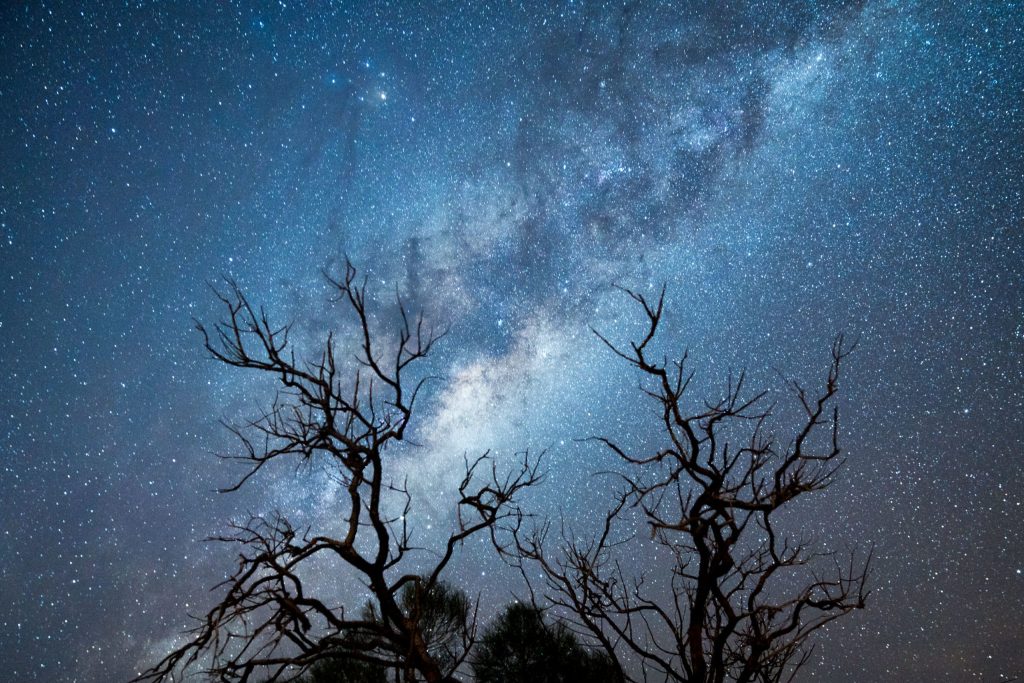
Astrophotography is one of the most rewarding branches of photography. With patience, basic equipment, and an understanding of the night sky, anyone can begin capturing breathtaking images of stars, planets, and distant galaxies. While the results may look complex, the fundamentals are accessible to beginners willing to learn and experiment.
What Is Astrophotography?
Astrophotography is the practice of photographing celestial objects and night sky phenomena. It ranges from simple wide-field images of starry skies to highly technical deep-sky imaging of nebulae and galaxies.
For beginners, astrophotography usually focuses on:
- Starry landscapes
- The Moon
- Bright planets
- The Milky Way
These targets require minimal equipment and provide excellent learning opportunities while producing visually striking results.
Why Astrophotography Is More Accessible Than Ever
Advances in digital camera sensors, noise reduction, and image processing have transformed astrophotography. Today, entry-level DSLR and mirrorless cameras outperform professional equipment from just a decade ago.
In addition, open-access astronomical data and community-driven platforms such as NASA’s Astronomy Picture of the Day have inspired a new generation of amateur astrophotographers worldwide.
This accessibility means that beginners no longer need expensive telescopes or observatory-grade gear to capture impressive night sky images.
Essential Equipment for Beginner Astrophotography
Starting with the right tools simplifies the learning process. While advanced setups exist, beginners should focus on mastering the basics first.
Camera
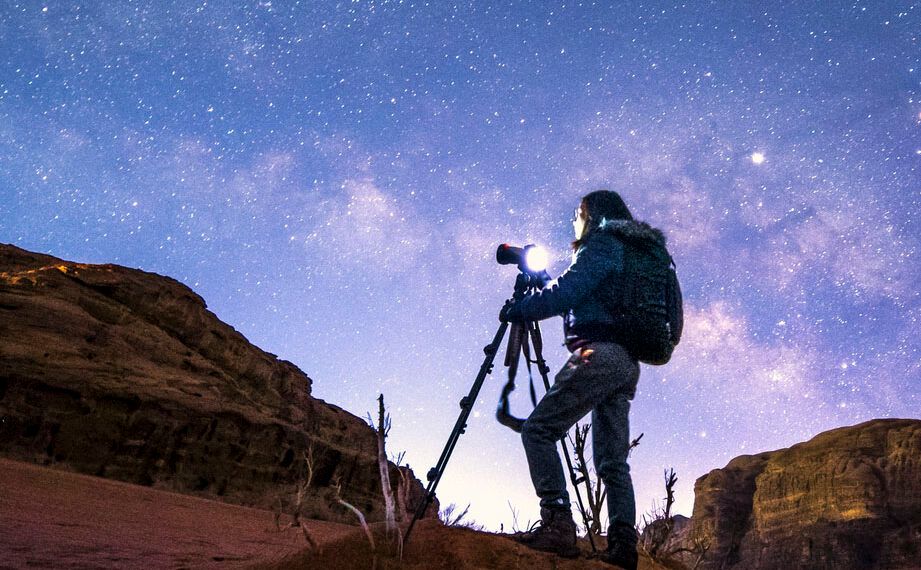
A DSLR or mirrorless camera with manual controls is ideal. Key features include:
- Manual exposure settings
- RAW image capture
- Good low-light performance
Even older models can produce excellent results when used correctly.
Lens
A wide-angle lens with a fast aperture is recommended. Lenses between 14mm and 24mm with apertures of f/2.8 or wider are popular choices for night sky photography.
Tripod
A sturdy tripod is essential. Long exposures amplify even the smallest vibrations, so stability is critical.
Optional Accessories
- Remote shutter release or intervalometer
- Headlamp with red light mode
- Star tracking mount (for later progression)
Understanding the Night Sky
Astrophotography is as much about astronomy as it is about photography. Learning how the sky moves will dramatically improve your results.
Earth’s Rotation and Star Trails
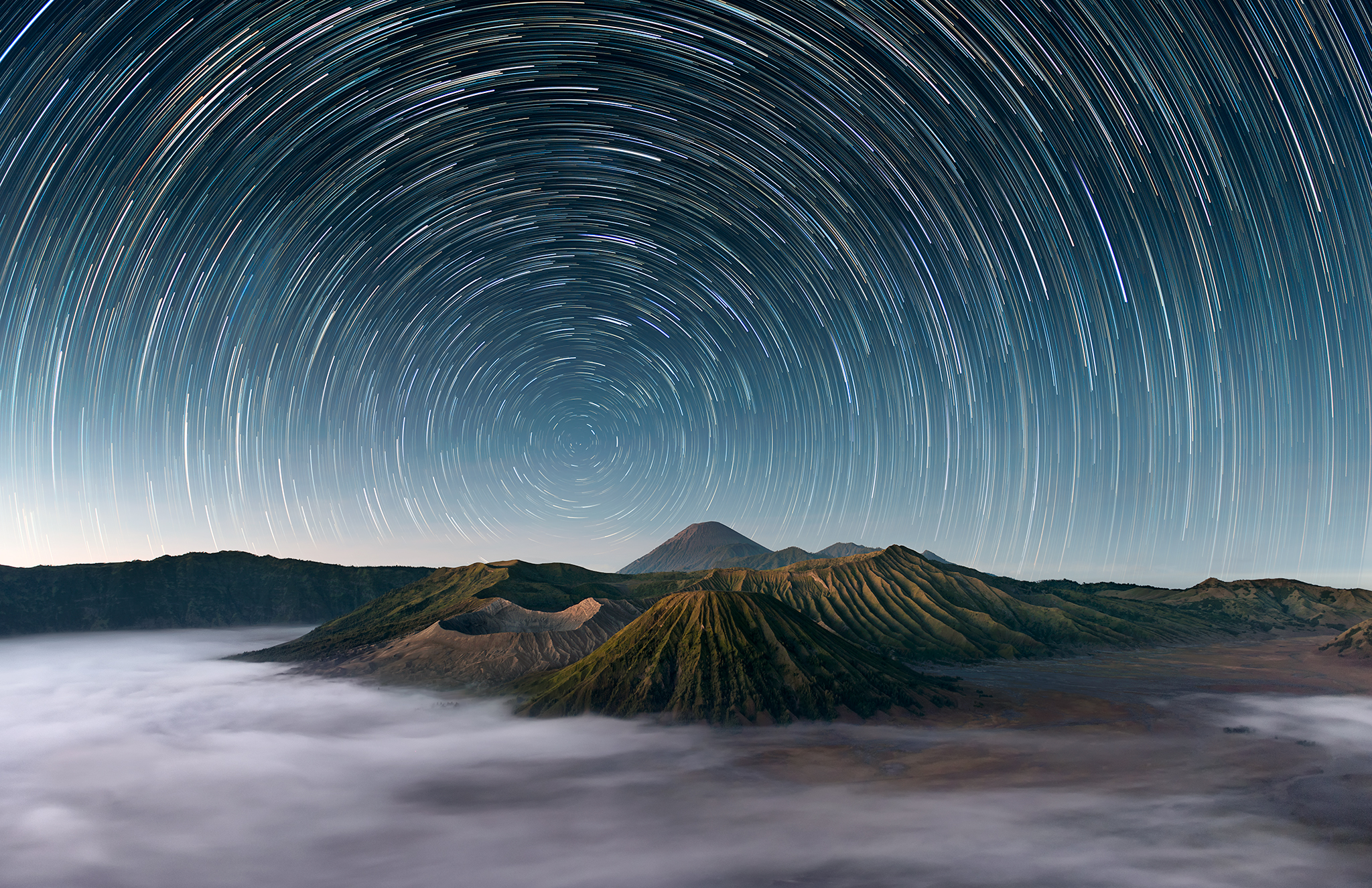
Because Earth rotates, stars appear to move across the sky. Long exposures without tracking will produce star trails instead of sharp points. This motion dictates how long your exposure can be.
A commonly used guideline is the 500 Rule:
500 ÷ focal length = maximum exposure time (in seconds)
While not perfect, this rule helps beginners avoid excessive star trailing.
The Milky Way Season
The Milky Way core is visible only during certain months, depending on your latitude. In the Northern Hemisphere, it is best seen from late spring to early autumn.
Tools like Stellarium help visualize sky conditions and plan shooting sessions accurately.
Finding the Perfect Location
Light pollution is the greatest enemy of astrophotography. Artificial light washes out faint stars and reduces contrast.
Dark Sky Sites
Beginners should aim to photograph from areas with minimal light pollution. The Light Pollution Map is a trusted resource for identifying dark locations.
National parks, rural areas, and designated Dark Sky Reserves offer optimal conditions.
Weather and Atmospheric Conditions
Clear skies are essential, but transparency matters more than cloud cover alone. Low humidity and minimal atmospheric turbulence improve image quality.
Camera Settings for Beginners
Mastering manual camera settings is a key milestone in astrophotography.
Basic Starting Settings
- Mode: Manual
- Aperture: As wide as possible
- ISO: 1600–3200
- Shutter speed: 10–25 seconds (depending on focal length)
- Focus: Manual, set to infinity
Always shoot in RAW format to preserve maximum detail for post-processing.
Achieving Sharp Focus
Autofocus rarely works in low light. Use live view and magnify a bright star or distant light to fine-tune focus manually.
Composition: Turning Stars into Art
Astrophotography is not only about technical accuracy. Composition plays a crucial role in creating compelling images.
Foreground Elements
Including mountains, trees, or buildings adds scale and context to the night sky. This technique is known as landscape astrophotography.
Leading Lines and Framing
Natural lines can guide the viewer’s eye toward the stars or Milky Way core, enhancing visual impact.
Post-Processing Basics
Post-processing is an essential step in astrophotography. Raw images often look flat and noisy, but careful editing reveals hidden detail.
Essential Adjustments
- White balance correction
- Noise reduction
- Contrast and clarity enhancement
- Highlight and shadow adjustments
Software such as Adobe Lightroom or free alternatives like GIMP can handle beginner workflows effectively.
Common Beginner Mistakes to Avoid
Learning astrophotography involves trial and error. Common pitfalls include:
- Shooting under heavy light pollution
- Overexposing stars
- Neglecting focus accuracy
- Ignoring weather and moon phases
The Moon, in particular, can dramatically brighten the sky in the solar system. Beginners should aim to shoot during new moon phases whenever possible.
Building Skills and Progressing Further
As confidence grows, beginners can explore advanced techniques such as:
- Star trackers for longer exposures
- Image stacking
- Deep-sky object photography
Organizations like the Sky & Telescope magazine provide authoritative guidance for continued learning.
Why Astrophotography Matters
Beyond aesthetics, astrophotography fosters a deeper connection with the universe. It encourages patience, scientific curiosity, and an appreciation for Earth’s place in the cosmos.
By learning to photograph the night sky, beginners join a tradition that spans centuries—from early astronomical sketches to modern digital imaging.
Conclusion: Your First Steps Under the Stars
Astrophotography for beginners is not about perfection; it is about exploration. With basic equipment, thoughtful planning, and practice, anyone can capture the beauty of the night sky.
Every image is a learning experience. As your skills improve, so will your ability to translate the quiet wonder of the cosmos into photographs that inspire others.
The night sky is always above you—waiting to be captured.
Si quieres conocer otros artículos parecidos a Astrophotography for Beginners: Capturing the Night Sky puedes visitar la categoría Observational Astronomy.
Leave a Reply