The Most Distant Galaxy Ever Observed: Windows Into the Early Universe
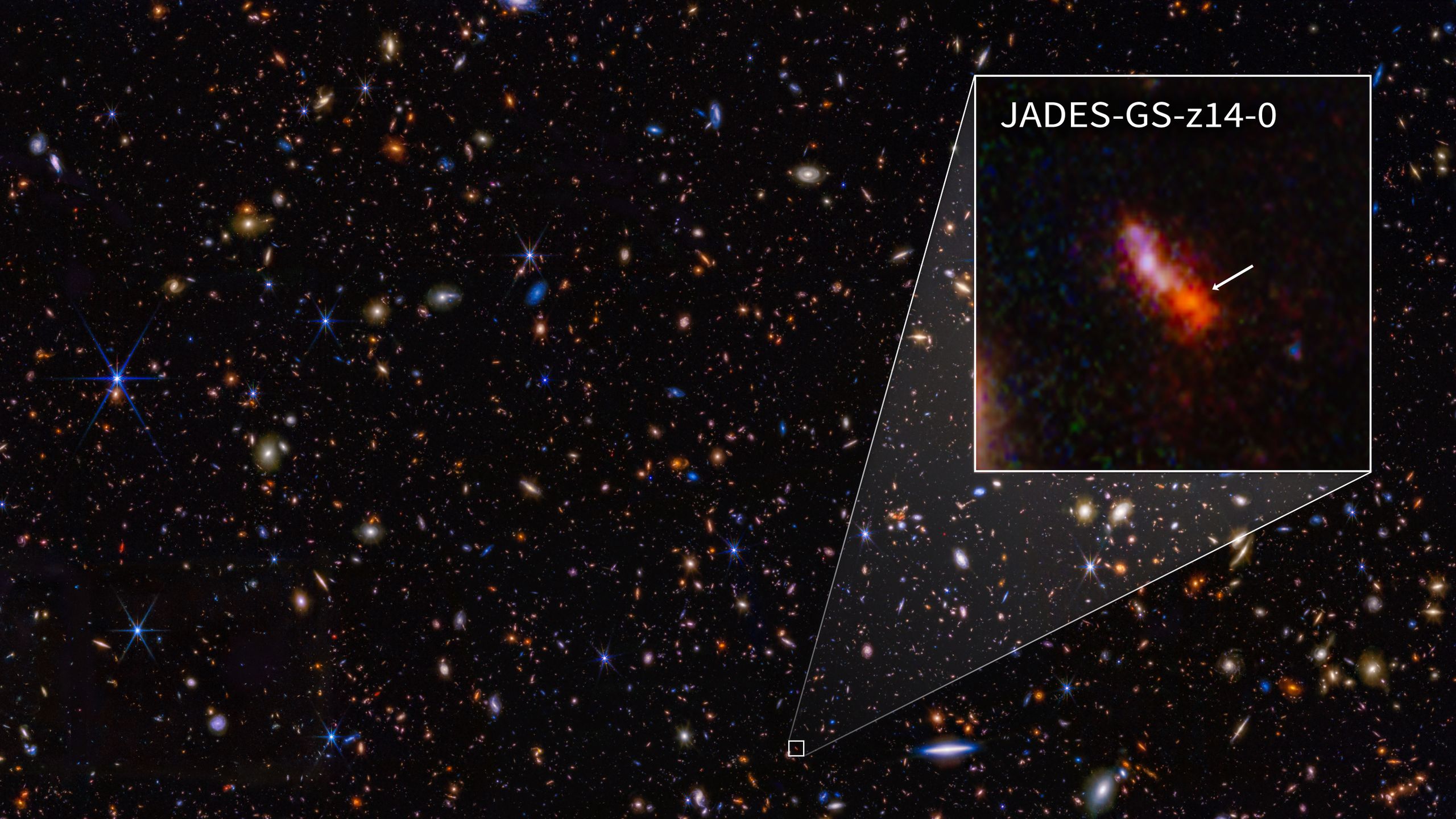
The discovery of the most distant galaxy ever observed represents a monumental step in understanding the early universe. This galaxy, located billions of light-years away, provides astronomers with a direct glimpse into the formation of the first cosmic structures shortly after the Big Bang. In this article, we explore the significance of this discovery, the methods used to identify such remote objects, and what it tells us about galaxy formation and the evolution of the cosmos.
What Makes a Galaxy “Distant”?
In astronomy, the term distant galaxy generally refers to galaxies whose light has taken billions of years to reach us. Observing such galaxies is equivalent to looking back in time, allowing scientists to study conditions in the early universe. The more distant the galaxy, the closer we get to witnessing the universe’s formative stages.
Redshift: Measuring Cosmic Distance
A key tool in identifying distant galaxies is redshift. As the universe expands, light from faraway galaxies stretches toward longer wavelengths, shifting toward the red end of the spectrum. By measuring a galaxy’s redshift, astronomers can determine its distance and the epoch in the universe’s history when its light was emitted.
The Most Distant Galaxy Ever Observed
The galaxy discovered in recent observations exhibits a record-breaking redshift, placing it over 13.4 billion light-years away. This means its light began traveling toward Earth just a few hundred million years after the Big Bang, during an era known as the Cosmic Dawn.
How It Was Detected
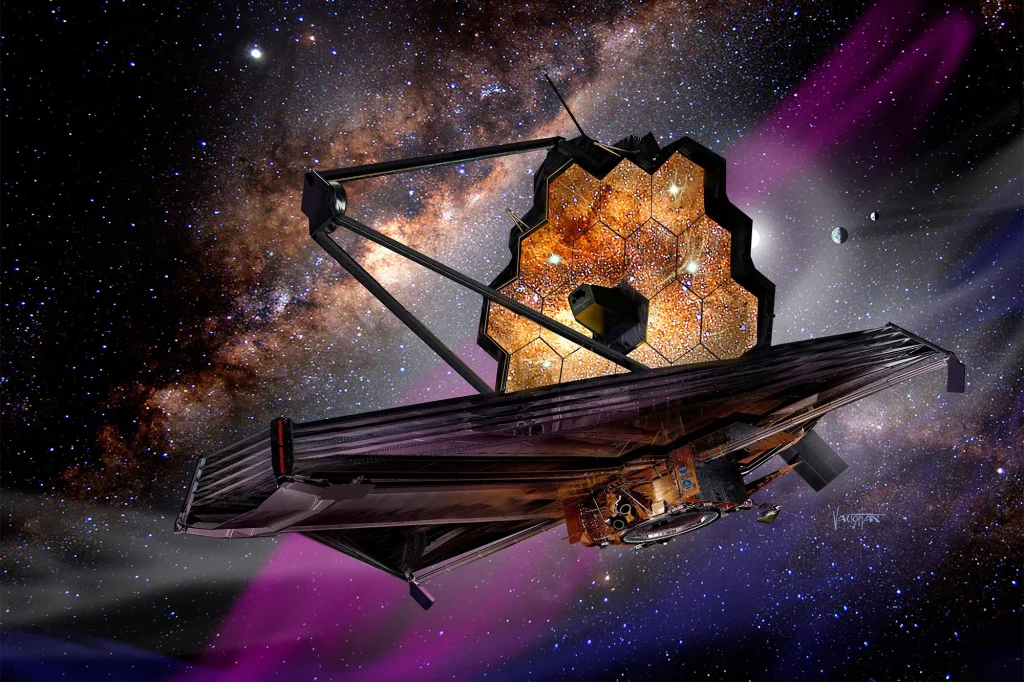
Advanced telescopes such as the James Webb Space Telescope (JWST) and high-sensitivity ground-based observatories were instrumental in detecting the galaxy. Infrared distant galaxy observations allowed astronomers to peer through cosmic dust and see faint signals stretched into longer wavelengths due to extreme redshift.
Characteristics of the Galaxy
- Size: Smaller than modern galaxies, indicative of early-stage formation.
- Star Formation: Rapid star formation, producing bright, young stars.
- Composition: Primarily hydrogen and helium, with minimal heavy elements, consistent with primordial conditions.
Why This Discovery Matters
Studying the most distant galaxies offers multiple insights:
- Understanding how the first galaxies formed and evolved.
- Investigating the reionization era, when the universe’s neutral hydrogen became ionized.
- Testing cosmological models of dark matter, dark energy, and large-scale structure formation.
- Providing constraints on star formation rates and chemical enrichment in the early universe.
Tools and Techniques in Observing Early Galaxies
Observing distant galaxies requires innovative techniques and instruments:
Space-Based Observatories
Telescopes like JWST, Hubble Space Telescope, and upcoming missions such as the Nancy Grace Roman Space Telescope can observe faint galaxies in infrared and visible light, bypassing atmospheric interference and detecting redshifted signals.
Gravitational Lensing
Massive foreground objects, like galaxy clusters, can act as natural telescopes, magnifying the light from extremely distant galaxies. This phenomenon, known as gravitational lensing, has enabled astronomers to detect galaxies that would otherwise be too faint to observe.
Spectroscopy
Spectroscopic analysis allows precise measurement of redshift and chemical composition. By examining emission and absorption lines, astronomers can infer the types of stars present, star formation rates, and the presence of interstellar gas.
Implications for Cosmology and Galaxy Evolution
The discovery of galaxies from the Cosmic Dawn distant galaxy provides essential clues for cosmology and the formation of structures in the universe:
Formation of First Galaxies
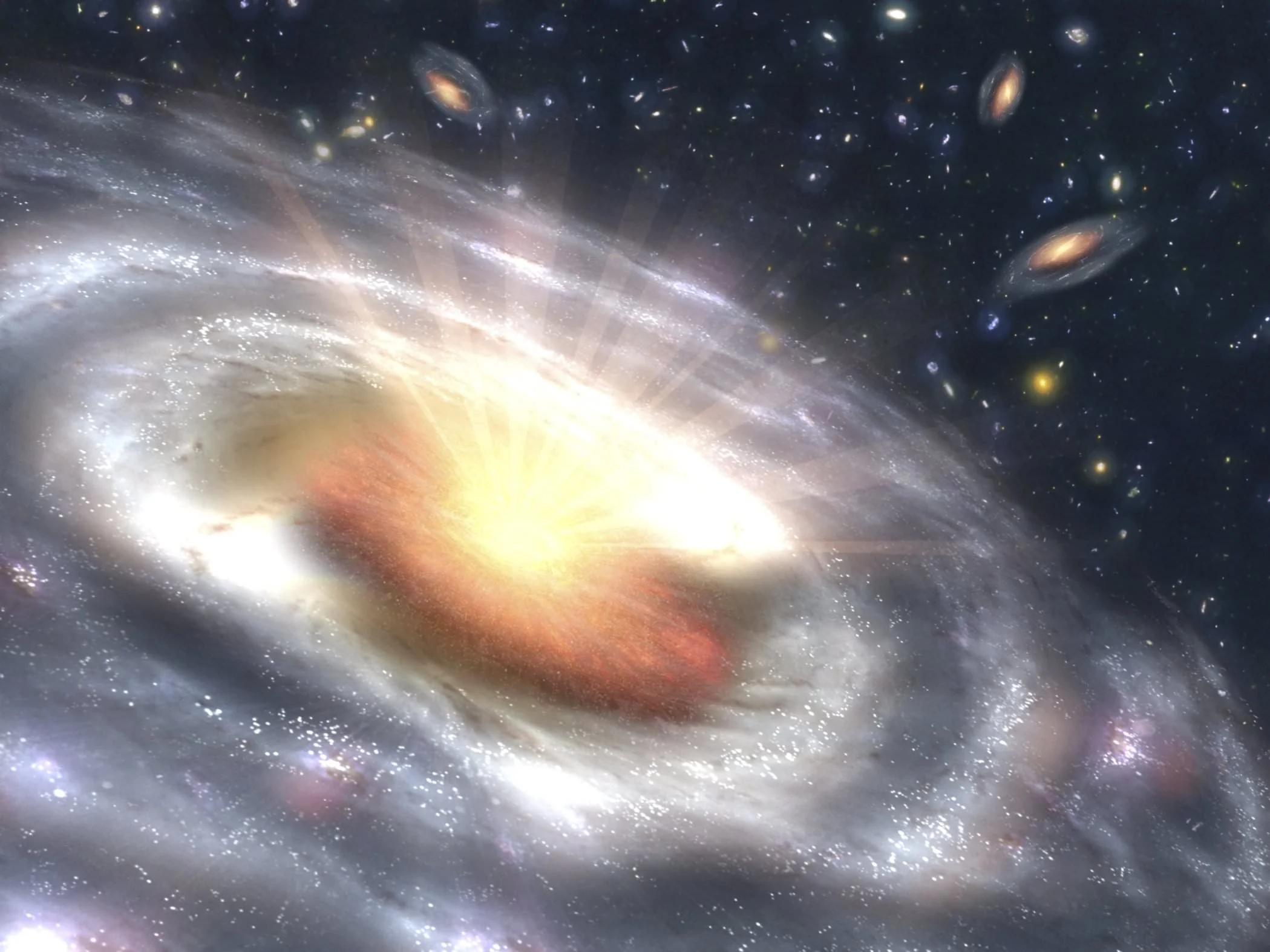
These distant galaxies suggest that galaxy formation began earlier and more rapidly than previously thought. Observing their mass, star formation rates, and morphology informs models of hierarchical assembly, where smaller galaxies merge to form larger structures.
Reionization Era Insights
The light from the earliest galaxies helps map the reionization era, a period when the first luminous sources ionized neutral hydrogen in the universe. Understanding this process is crucial for models of cosmic evolution.
Dark Matter and Structure Formation
By analyzing the distribution and clustering of early galaxies, scientists gain insights into the role of dark matter in shaping the cosmic web. Observations of distant galaxies provide constraints on theoretical models of dark matter behavior and its interaction with baryonic matter.
Challenges in Studying Distant Galaxies
Despite advanced technology, distant galaxy studying the most distant galaxies comes with significant challenges:
- Faintness: These galaxies emit extremely little light, requiring long exposure times and sensitive instruments.
- Redshifted Signals: Extreme redshifts push light into infrared, necessitating specialized detectors.
- Confusion with Foreground Objects: Differentiating distant galaxies from closer sources or noise requires careful analysis.
Future Prospects
The study of the most distant galaxy is just beginning. Upcoming observatories and technological advancements will continue to push the boundaries:
- JWST and Roman Space Telescope will provide deeper, more detailed surveys of the early universe.
- Extremely Large Telescopes (ELTs) on Earth will combine spectroscopy and adaptive optics to resolve early galactic structures.
- Next-generation simulations and AI tools will help interpret complex datasets and predict galaxy formation pathways.
The discovery of the most distant galaxy ever observed opens an unprecedented window into the early universe. By examining these primordial structures, astronomers gain vital knowledge about galaxy formation, cosmic reionization, and the evolution of the universe itself. As telescopes become more powerful and techniques more refined, our understanding of the universe’s first billion years will continue to grow, revealing the origins of the cosmic structures we see today.
Si quieres conocer otros artículos parecidos a The Most Distant Galaxy Ever Observed: Windows Into the Early Universe puedes visitar la categoría Solar System.
Leave a Reply