Could the Universe Be Infinite?
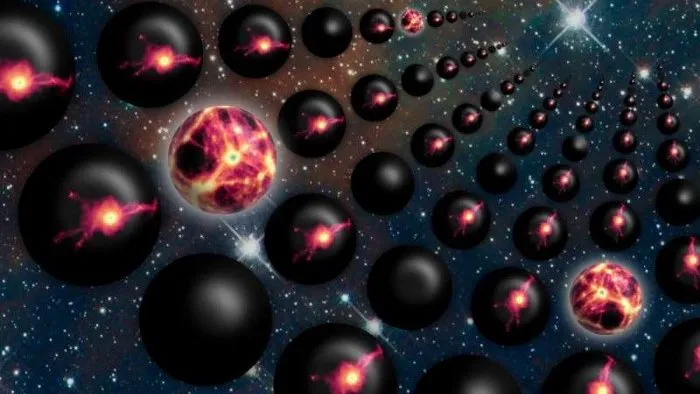
In this article, we will explore the concept of an infinite universe, examining the latest astronomical observations, theories in cosmology, and philosophical implications. Understanding this topic requires both scientific reasoning and a willingness to grapple with ideas that challenge intuition.
What We Know About the Observable Universe
First, it’s important to distinguish between the observable universe and the universe as a whole. The observable universe is the region from which light has had time to reach us since the Big Bang, roughly 13.8 billion years ago. This spans about 93 billion light-years in diameter.
However, the observable universe is not necessarily the entire universe. Beyond this horizon, space could continue endlessly, or it might curve back on itself. Scientists use the term "observable" precisely because there are regions of space that remain forever inaccessible to our instruments.
The Concept of an Infinite Universe
When cosmologists talk about an infinite universe, they mean that space extends without end in all directions. This idea is not just science fiction; it emerges naturally from several models of cosmology.
Flat Geometry and Infinity
The shape of the universe is determined by its geometry. Observations of the cosmic microwave background (CMB), the faint afterglow of the Big Bang, suggest that the universe is remarkably flat. In flat space, parallel lines never meet, and there is no inherent curvature. A flat, unbounded universe is consistent with being infinite.
Alternative Geometries
If the universe is closed, it would curve back on itself like the surface of a sphere, making it finite but unbounded — meaning you could theoretically travel in one direction and eventually return to your starting point. In an open universe, space curves outward like a saddle, which could also lead to an infinite expanse.
Observational Evidence and Limitations
While geometry provides hints, direct observation cannot confirm infinity. Telescopes can only see as far as light has traveled since the universe began. Beyond this limit, no signal has had time to reach us.
Despite these limitations, cosmologists study the large-scale distribution of galaxies, gravitational lensing, and the cosmic microwave background to infer properties of the universe. All available evidence suggests that if the universe is finite, it is so large that it appears infinite for practical purposes.
Implications of an Infinite Universe
An infinite universe has profound implications:
- Infinite galaxies: There could be endless galaxies, each with billions of stars and planets.
- Cosmic duplicates: In an infinite universe, every possible arrangement of matter could exist somewhere, potentially creating duplicates of Earth and even of yourself.
- Philosophical questions: Infinity challenges our understanding of causality, meaning, and uniqueness in the cosmos.
These ideas may sound abstract, but they are grounded in mathematical reasoning and physical theory.
Multiverse Theories and Infinity
Some theories propose that our universe is just one of many in a multiverse. Each universe could have different physical laws, sizes, and properties. In this context, infinity may apply not only to space but also to the number of universes.
The multiverse concept is controversial because it is difficult to test observationally. However, it provides a natural framework for thinking about an infinite cosmos without boundaries.
Challenges in Conceptualizing Infinity
Humans struggle to truly grasp infinity. It is not merely “very big” — it has no end. Infinite space raises questions about time, matter, and energy:
- Does an infinite universe contain infinite matter?
- Can physical laws remain consistent over infinite distances?
- What does infinity imply for entropy and the ultimate fate of the cosmos?
Physicists and philosophers continue to debate these questions, highlighting the intersection of science and imagination in cosmology.
Historical Perspectives
The idea of an infinite universe has evolved over time. Ancient Greek philosophers, such as Democritus, imagined boundless space filled with atoms. In the Middle Ages, the universe was often conceived as finite and centered on Earth. Modern cosmology, driven by Einstein’s theory of general relativity and observations of the CMB, supports the possibility of an infinite universe.
Modern Cosmological Models
Current models explore both finite and infinite scenarios:
ΛCDM Model
The Lambda Cold Dark Matter (ΛCDM) model is the standard cosmological framework. It assumes a flat, expanding universe, consistent with the idea of infinity. It successfully predicts the distribution of galaxies and the behavior of cosmic expansion.
Inflationary Theory
Inflationary theory proposes that a brief period of exponential expansion occurred in the early universe. Inflation can stretch space so much that it effectively becomes infinite, even if it started from a finite region.
Observational Challenges
Despite powerful telescopes and satellites, we cannot observe the universe beyond a certain horizon. Therefore, infinity remains a theoretical, rather than empirical, conclusion. Future observations may refine or redefine our understanding.
Why the Question Matters
Asking whether the universe is infinite is not just an abstract curiosity. It influences how we:
- Understand cosmology and fundamental physics
- Explore the possibility of extraterrestrial life
- Model the universe’s past and future evolution
It also enriches human perspective, reminding us that Earth is a small part of a vast, potentially limitless cosmos.
Looking Ahead: The Future of Cosmic Exploration
Future missions, advanced telescopes like the James Webb Space Telescope, and next-generation cosmic surveys will provide more clues. While direct proof of infinity may remain elusive, each observation improves our understanding of cosmic geometry, expansion, and structure.
The universe may be infinite, extending endlessly beyond what we can see. While we cannot directly confirm this, current observations, mathematical models, and cosmological theory make it a plausible scenario. Whether finite or infinite, the cosmos continues to inspire awe, pushing humans to explore, question, and imagine.
Ultimately, the question “Could the Universe Be Infinite?” invites us to embrace the unknown, challenge our assumptions, and marvel at the vastness of reality.
Si quieres conocer otros artículos parecidos a Could the Universe Be Infinite? puedes visitar la categoría Solar System.