Moon Bases: Technology Needed to Live Off Earth
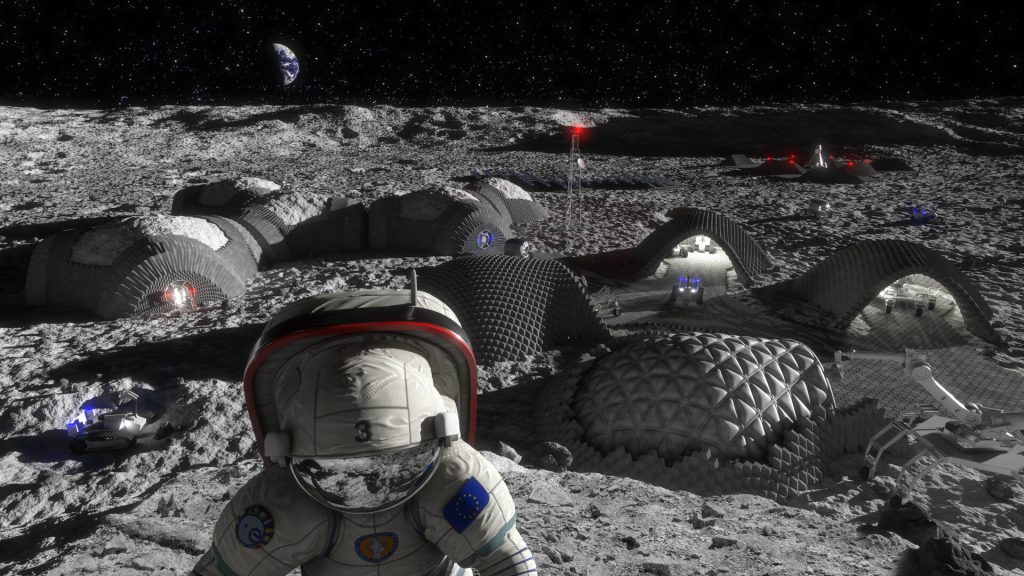
This article explores the technologies necessary to create sustainable moon bases and what the future of lunar living might look like. Whether for scientific research, mining, or serving as a stepping-stone for Mars missions, understanding these requirements is essential for the next era of space exploration.
Why the Moon?
The Moon offers several advantages for humanity’s first permanent outpost beyond Earth:
- Proximity: At approximately 384,400 km from Earth, the Moon is reachable within three days.
- Low gravity: One-sixth of Earth’s gravity makes construction and transportation easier.
- Resources: Water ice, regolith, and rare elements could be extracted for life support and fuel production.
Despite these benefits, the Moon’s harsh environment necessitates advanced technology to support human life safely and sustainably.
Life Support Systems
Life support is the cornerstone of any lunar base. Without a stable supply of air, water, and food, permanent habitation is impossible.
Air Supply and Atmosphere Control
The Moon has no atmosphere, so moon bases must generate breathable air. This requires:
- Oxygen production systems, possibly from lunar regolith or water electrolysis
- Carbon dioxide removal technologies
- Pressure control to maintain Earth-like conditions within habitats
NASA’s ongoing research in closed-loop life support systems, used on the ISS, provides a foundation for lunar applications.
Water Management
Water is essential for drinking, hygiene, and oxygen production. Moon bases will rely on:
- Extraction of ice from permanently shadowed craters
- Recycling wastewater using advanced filtration
- Storing water in insulated containers to prevent freezing
Food Production
Transporting food from Earth is costly, so growing food on the Moon is crucial. Hydroponics and aeroponics systems, which use minimal water and no soil, could supply fresh vegetables and reduce reliance on resupply missions.
Habitat Construction and Radiation Protection
Moon habitats must shield inhabitants from extreme temperatures and cosmic radiation.
Lunar Regolith Shielding
The Moon lacks a magnetic field, exposing the surface to cosmic rays. Covering habitats with several meters of lunar regolith (surface dust) can provide effective radiation protection.
Inflatable and Modular Habitats
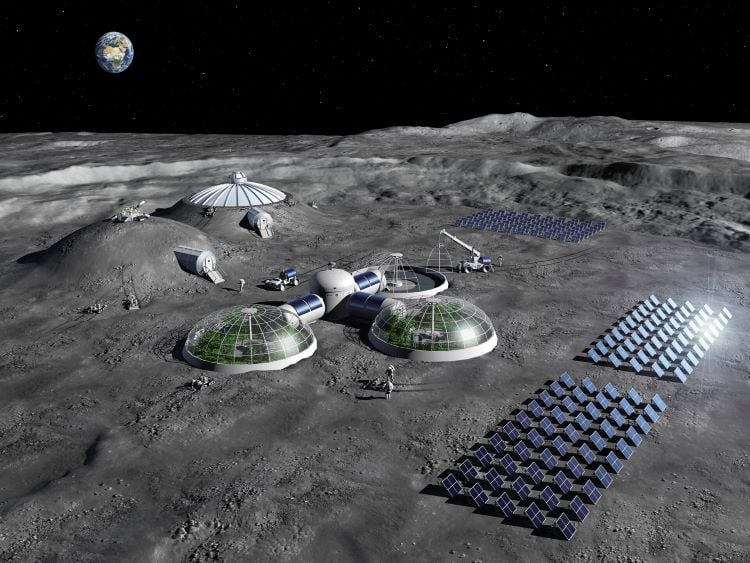
Inflatable structures can be transported compactly and expanded on the Moon. Modular designs allow bases to grow as missions expand, combining living quarters, labs, and storage areas.
Temperature Regulation
With temperatures ranging from -173°C at night to 127°C during the day, moon bases require thermal insulation, reflective coatings, and possibly underground construction to maintain livable conditions.
Energy Generation
Reliable power is essential for life support, lighting, and scientific operations. The Moon offers several energy solutions:
Solar Power
Solar panels are the most feasible option. Some lunar poles experience near-constant sunlight, making them ideal for solar farms.
Nuclear Reactors
Small modular nuclear reactors could provide constant energy, especially during the two-week lunar night when solar power is unavailable.
Energy Storage
Batteries or regenerative fuel cells can store excess energy, ensuring uninterrupted operation of moon bases.
Transportation and Mobility
Moving people and materials on the Moon requires specialized vehicles:
- Lunar Rovers: Pressurized and unpressurized vehicles for surface exploration
- Robotic Transport: Autonomous drones and cargo carriers for resource collection
- Lunar Hoppers: Short-range vehicles capable of low-gravity “hops” across terrain
Efficient transportation ensures safety, expands operational range, and supports scientific and industrial activities.
Communication Systems
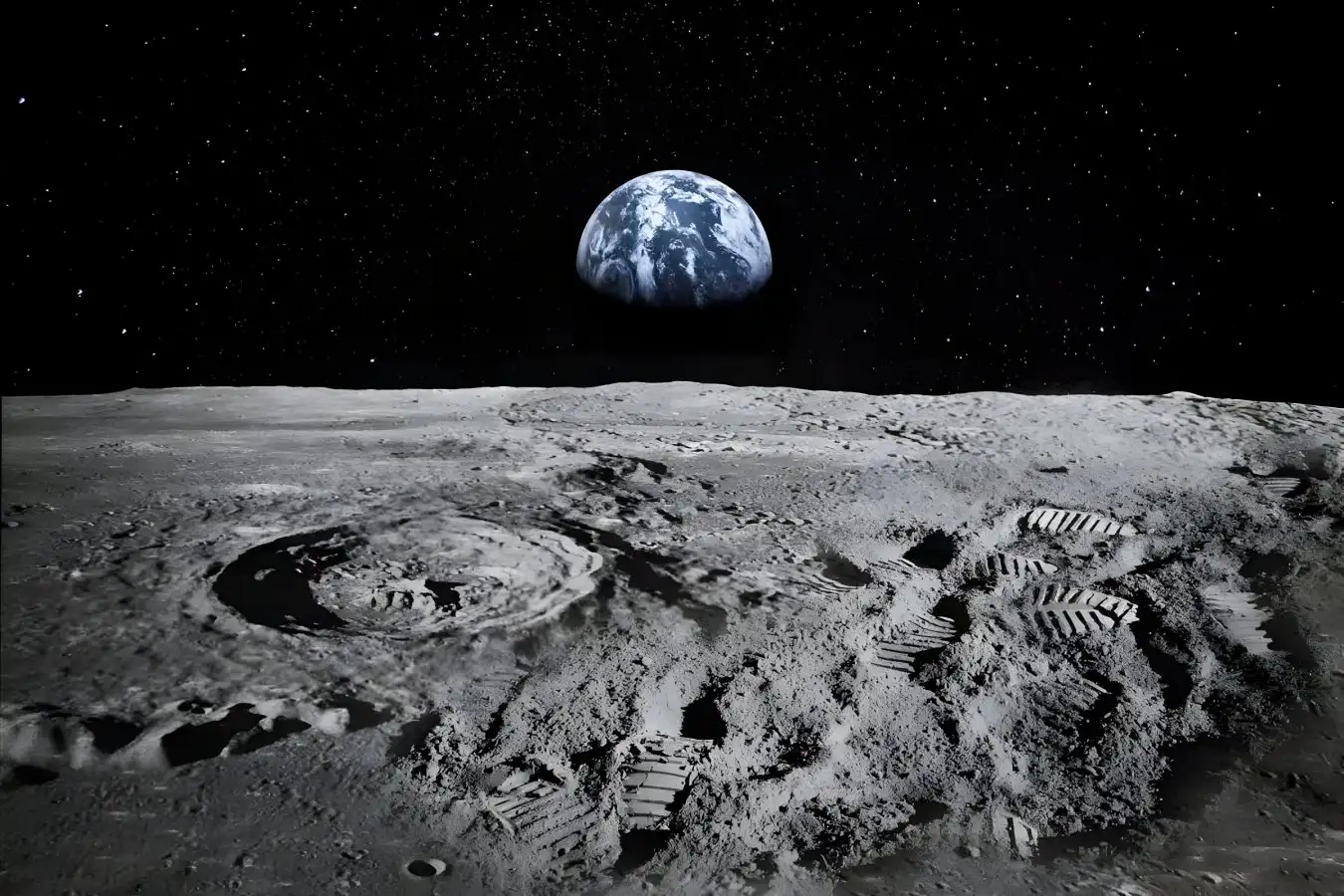
Maintaining contact with Earth is critical. High-bandwidth communication satellites in lunar orbit or relay stations at strategic locations ensure continuous data transmission for science, operations, and safety.
Resource Utilization: In-Situ Resource Use (ISRU)
Producing materials directly on the Moon reduces dependence on Earth resupply, a concept known as In-Situ Resource Utilization (ISRU). Examples include:
- Water ice extraction for drinking, oxygen, and fuel
- Lunar regolith processed into building materials via 3D printing
- Solar cells and metals manufactured locally
ISRU technologies are essential for long-term sustainability of moon bases.
Scientific and Industrial Applications
Moon bases are not just about survival—they enable groundbreaking research and commercial opportunities:
- Geological studies of lunar history and solar system formation
- Astronomical observations from a stable, low-atmosphere environment
- Mining of rare earth elements and helium-3 for potential energy sources
These activities provide both knowledge and potential economic benefits that justify investment in lunar infrastructure.
Challenges and Future Prospects
Despite technological advances, several challenges remain:
- Extreme environmental conditions and micrometeorite risks
- Long-term psychological effects of isolation on astronauts
- Developing self-sufficient life support and agriculture systems
International cooperation and private-sector involvement are accelerating progress. NASA’s Artemis program aims to establish sustainable moon bases in the coming decade, while companies like SpaceX and Blue Origin focus on transportation and infrastructure.
The dream of establishing moon bases is moving from science fiction to achievable reality. With advancements in life support, habitat construction, energy, and resource utilization, humans may soon live and work permanently on the Moon. These bases will not only serve as platforms for scientific discovery but also as stepping-stones for humanity’s journey to Mars and beyond.
As technology continues to evolve, the Moon may become humanity’s first true home off Earth—a bold testament to our ingenuity, resilience, and curiosity.
Si quieres conocer otros artículos parecidos a Moon Bases: Technology Needed to Live Off Earth puedes visitar la categoría Space Technology & Engineering.
Leave a Reply