Artificial Intelligence in Space Exploration
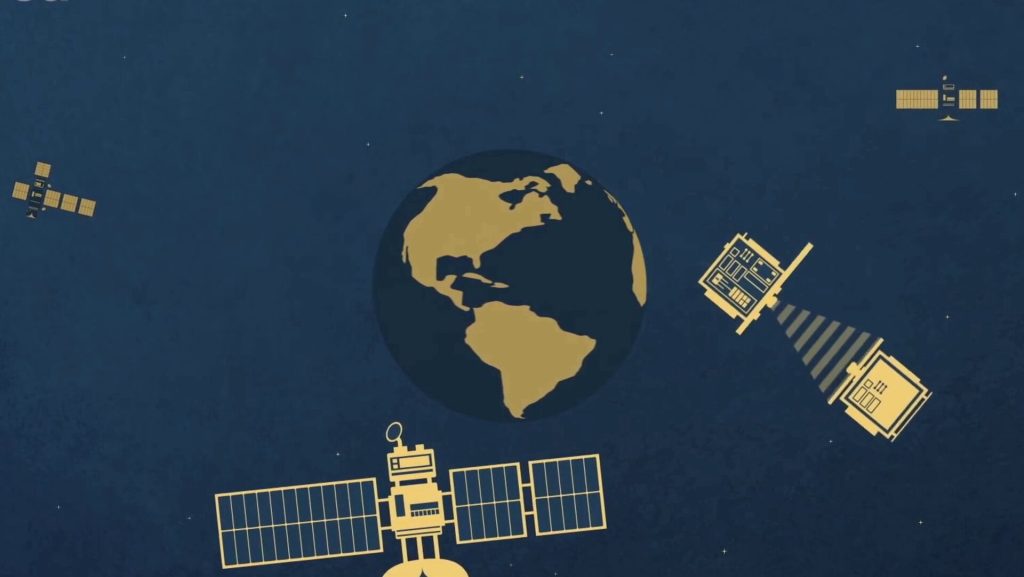
Space exploration has always pushed technology to its limits. Extreme distances, harsh environments, and communication delays demand systems that can operate independently for long periods of time. In recent decades, one technology has become increasingly essential to meeting these challenges: artificial intelligence in space exploration.
This article explores how AI is used in modern space missions, why it is necessary, and how it will shape the future of exploration—from robotic probes to potential human missions beyond the Solar System.
Why Space Exploration Needs Artificial Intelligence
Space is an unforgiving environment. Communication delays, limited resources, and unpredictable conditions make real-time human control impractical or impossible.
For example:
- Signals between Earth and Mars can take up to 22 minutes one way
- Spacecraft must operate with limited power and computing resources
- Unexpected hazards can arise without warning
Artificial intelligence allows spacecraft and instruments to respond autonomously, reducing risk and increasing scientific return. Instead of waiting for instructions, AI-powered systems can analyze situations and act immediately.
What Do We Mean by Artificial Intelligence in Space?
In space missions, artificial intelligence does not resemble human-like thinking. Instead, it refers to a collection of techniques that allow machines to:
- Recognize patterns
- Learn from data
- Make decisions under uncertainty
- Optimize complex processes
These systems often include machine learning, computer vision, planning algorithms, and autonomous control systems. Together, they form the backbone of intelligent space technology.
Early Uses of AI in Space Missions
AI has been part of space exploration longer than many realize. As early as the 1990s, NASA began integrating autonomous reasoning systems into spacecraft operations.
Remote Agent Experiment
In 1999, NASA’s Deep Space 1 mission tested an onboard AI system called the Remote Agent. This software planned activities, diagnosed problems, and corrected faults without human intervention.
The success of this experiment demonstrated that spacecraft could manage themselves—a revolutionary concept at the time.
NASA provides historical documentation of this milestone
AI and Robotic Spacecraft Navigation
One of the most critical applications of artificial intelligence in space exploration is autonomous navigation.
Hazard Avoidance on Mars
Mars rovers operate in rugged, unpredictable terrain. AI-powered vision systems analyze images from onboard cameras to:
- Identify rocks, slopes, and obstacles
- Select safe driving paths
- Adjust routes in real time
NASA’s Perseverance rover uses advanced autonomous navigation to travel farther each day than previous rovers, maximizing scientific productivity.
Artificial Intelligence in Planetary Science
Space missions generate enormous amounts of data. Modern telescopes and probes produce far more information than human teams can analyze manually.
Data Analysis and Pattern Recognition
Machine learning algorithms help scientists:
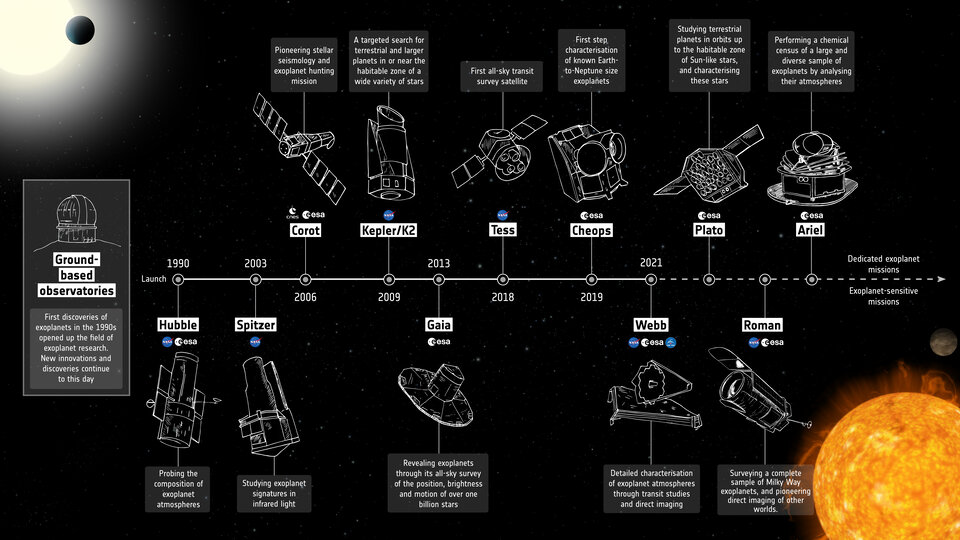
- Detect exoplanets in telescope data
- Classify galaxies by shape and structure
- Identify unusual or rare cosmic events
For example, AI has been used to discover exoplanets that traditional methods missed by recognizing subtle patterns in stellar brightness data.
The European Space Agency highlights these applications in its science programs.
AI-Powered Space Telescopes
Space telescopes operate far from Earth and must make efficient use of limited observation time.
Optimizing Observations
Artificial intelligence helps telescopes:
- Prioritize targets
- Adjust observation schedules
- Filter out noise and artifacts
The James Webb Space Telescope, for example, relies on intelligent scheduling systems to manage its complex observation plans efficiently.
AI-based image processing also enhances faint signals, revealing structures that would otherwise remain hidden.
Artificial Intelligence in Satellite Operations
Earth-orbiting satellites increasingly rely on AI to function independently.
Autonomous Health Monitoring
AI systems continuously monitor spacecraft health, detecting anomalies before they become critical failures. This includes:
- Power system diagnostics
- Thermal control monitoring
- Communication system optimization
These capabilities reduce operational costs and extend mission lifetimes.
AI and Space Debris Management
Earth’s orbit is becoming increasingly crowded with satellites and debris. Avoiding collisions is a growing challenge.
Artificial intelligence helps:
- Predict orbital paths
- Identify high-risk conjunctions
- Recommend avoidance maneuvers
As satellite constellations expand, AI-driven traffic management will be essential for maintaining safe access to space.
Supporting Human Spaceflight
Artificial intelligence also plays a crucial role in missions involving astronauts.
Decision Support Systems
On long-duration missions, astronauts cannot rely on immediate guidance from Earth. AI systems can assist by:
- Diagnosing equipment issues
- Managing life-support systems
- Providing medical decision support
NASA’s research into AI-assisted crew autonomy is particularly relevant for future missions to Mars (NASA Human Spaceflight).

AI in the Search for Life Beyond Earth
One of the most exciting applications of artificial intelligence in space exploration is the search for extraterrestrial life.
Analyzing Chemical Signatures
AI systems can analyze complex chemical data from planetary surfaces and atmospheres, searching for patterns associated with biological processes.
On Mars, machine learning has been used to identify mineral compositions that suggest past water activity—key targets in the search for life.
Exploring the Outer Solar System and Beyond
As missions venture farther from Earth, autonomy becomes essential.
Future probes to the outer planets, Kuiper Belt, or interstellar space will depend heavily on AI to:
- Plan scientific observations
- Respond to unexpected discoveries
- Manage limited energy resources
Without intelligent systems, such missions would be impractical.
Ethical and Technical Challenges
While AI offers powerful capabilities, it also raises important challenges.
Trust and Verification
Space agencies must ensure that AI systems behave predictably under extreme conditions. Rigorous testing and verification are essential, as errors can be catastrophic.
Transparency
Understanding how AI systems make decisions is critical, especially when human lives or billion-dollar missions are at stake.
The Role of International Collaboration
Artificial intelligence in space exploration is not limited to a single country. Agencies and research institutions worldwide contribute to its development.
Collaborative missions allow shared expertise, open data, and cross-validation of AI models, strengthening trust and reliability.
The Future of Artificial Intelligence in Space Exploration
Looking ahead, AI is expected to become even more central to space exploration.
Potential future developments include:
- Fully autonomous scientific probes
- Self-repairing spacecraft
- Intelligent exploration of exoplanets
Some researchers envision AI-driven missions that can adapt their goals based on discoveries—essentially acting as robotic scientists.
Why AI Does Not Replace Human Exploration
Despite its power, artificial intelligence does not eliminate the need for humans. Instead, it extends human capabilities.
AI excels at:
Humans excel at creativity, intuition, and ethical judgment. The future of space exploration lies in collaboration between human intelligence and artificial intelligence.
Conclusion: A New Era of Cosmic Discovery
Artificial intelligence in space exploration represents a fundamental shift in how humanity explores the universe. From guiding rovers across alien landscapes to uncovering hidden patterns in cosmic data, AI has become an indispensable partner in discovery.
As missions grow more ambitious and venture farther from Earth, intelligent systems will enable exploration that would otherwise be impossible. Rather than replacing human curiosity, artificial intelligence amplifies it—allowing us to see farther, understand more deeply, and explore more boldly than ever before.
In the coming decades, the story of space exploration will increasingly be a story of collaboration between humans and machines, working together to unlock the universe’s greatest mysteries.
Si quieres conocer otros artículos parecidos a Artificial Intelligence in Space Exploration puedes visitar la categoría Space Technology & Engineering.
Leave a Reply