Variable Stars and What They Tell Us About the Universe
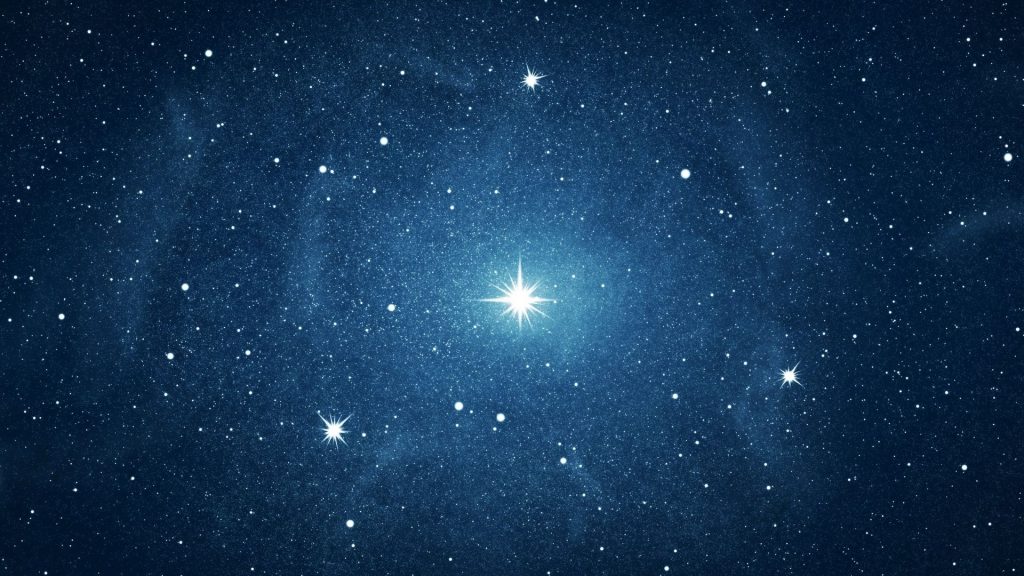
Astronomers have studied stellar brightness variations for centuries, transforming what once seemed like curiosities into precise scientific tools. Today, these stars play a central role in modern astrophysics, helping scientists map galaxies, measure vast distances, and test theories of stellar evolution.
What Does It Mean for a Star to Vary?
A star is considered variable when its observed brightness changes over time as seen from Earth. These variations may occur over hours, days, months, or even years, depending on the underlying physical cause.
Brightness changes can result from internal processes within the star or from external factors, such as eclipses by companion stars. By carefully measuring how and why a star’s light fluctuates, astronomers gain insight into its internal structure and physical properties.
The systematic study of variable stars has turned stellar brightness into a powerful diagnostic tool rather than a simple observational curiosity.
Early Discoveries and Historical Importance
One of the earliest known variable stars, Mira, was documented in the 16th century due to its dramatic changes in visibility. Over time, astronomers realized that these fluctuations followed predictable patterns.
By the late 19th and early 20th centuries, photographic plates and long-term monitoring programs revealed hundreds of stars with repeating brightness cycles. These discoveries laid the groundwork for understanding stellar pulsation and evolution.
Historical observations remain scientifically valuable today, providing long-term datasets that allow researchers to study changes over decades or even centuries.
Intrinsic and Extrinsic Variability
Astronomers classify brightness variations based on their physical origin. This distinction is crucial for interpreting what the observations reveal about stellar physics.
Intrinsic Variability
Intrinsic variability occurs when changes variable stars originate within the star itself. Pulsations, eruptions, or structural changes can alter luminosity.
- Radial pulsations that expand and contract the star
- Thermonuclear processes affecting energy output
- Surface activity and mass loss
Extrinsic Variability
Extrinsic changes arise from external factors. In these cases, the star’s energy output remains constant, but the observed brightness varies due to geometry or motion.
- Eclipses in binary systems
- Rotation revealing starspots
- Occultation by surrounding material
Understanding whether a star’s variability is intrinsic or extrinsic determines how astronomers interpret the data.
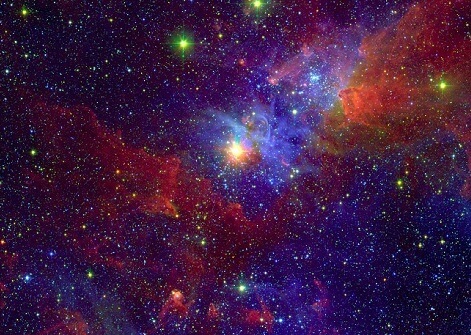
Pulsating Stars and Stellar Physics
Some stars expand and contract rhythmically due to internal pressure imbalances. These pulsations cause predictable changes in brightness and temperature.
The study of pulsation provides direct insight into stellar interiors, which cannot be observed directly. By analyzing light curves, astronomers infer mass, radius, and evolutionary stage.
Entire branches of stellar astrophysics are built around the behavior of variable stars whose pulsations follow well-defined physical laws.
Educational material from institutions such as the American Association of Variable Star Observers highlights how professional and amateur astronomers collaborate to monitor these objects.
Measuring Cosmic Distances
One of the most profound contributions of stellar variability is its role in distance measurement. Certain stars exhibit a direct relationship between their pulsation period and intrinsic brightness.
By comparing how bright these stars appear from Earth with how bright they truly are, astronomers calculate their distance with remarkable accuracy.
This method forms a critical step in the cosmic distance ladder, allowing scientists to measure distances far beyond the reach of parallax techniques.
Observational programs supported by the Space Telescope Science Institute rely heavily on these stars to calibrate deep-space measurements.
Binary Systems and Eclipsing Phenomena
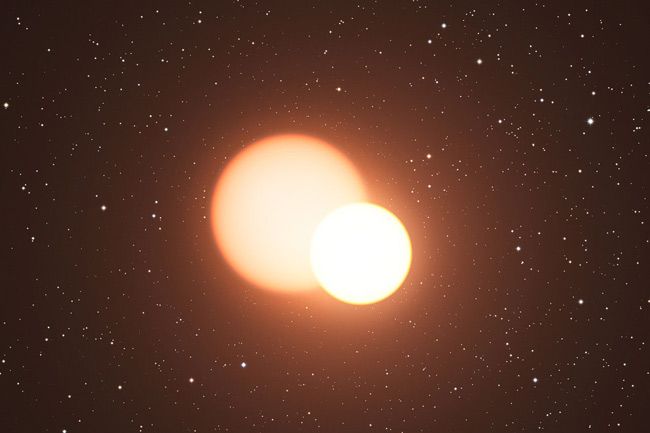
In some systems, two stars orbit each other closely. When their orbital plane aligns with Earth, one star periodically passes in front of the other, causing a dip in brightness.
These eclipsing systems are invaluable variable stars because they allow direct measurements of stellar mass and size. Precise timing of brightness changes reveals orbital mechanics with extraordinary accuracy.
Data from eclipsing systems provide some of the most reliable benchmarks for testing stellar evolution models.
What These Stars Reveal About the Universe
Beyond individual stellar properties, brightness variations help astronomers understand large-scale cosmic processes. They contribute to:
- Mapping the structure of our galaxy
- Determining the age of star clusters
- Measuring the expansion rate of the universe
The consistent behavior of variable stars across vast distances demonstrates that the laws of physics are universal.
Modern Observation Techniques
Advances in digital detectors, automated surveys, and space-based observatories have dramatically increased the number of known variable objects.
Time-domain astronomy now monitors millions of stars simultaneously, detecting subtle variations that were once impossible to observe.
Ground-based surveys and space missions work together to provide continuous, high-precision data across multiple wavelengths.
Data Reliability and Scientific Trust
Brightness measurements undergo rigorous calibration and verification. Independent observations, peer review, and open-access archives ensure data quality.
Long-term monitoring programs allow astronomers to distinguish true physical changes from instrumental effects, strengthening scientific confidence.
The consistent behavior observed in variable stars over decades reinforces their reliability as astrophysical tools.
Why Stellar Variability Still Matters
Even in an era of advanced simulations and massive datasets, stellar variability remains essential. It connects theoretical models with real observations and anchors our understanding of cosmic scale.
By studying these stars, astronomers gain a deeper appreciation of how local physical processes influence the structure and evolution of the universe as a whole.
Brightness changes in variable stars are far more than visual curiosities. They encode precise information about stellar interiors, cosmic distances, and universal expansion.
Through careful observation and analysis, astronomers have transformed these natural variations into some of the most powerful tools in modern science, revealing the dynamic and interconnected nature of the cosmos.
Si quieres conocer otros artículos parecidos a Variable Stars and What They Tell Us About the Universe puedes visitar la categoría Observational Astronomy.
Leave a Reply